
Showing regard, empathy, and acceptance on an equal basis. Giving one another the same consideration and value you would expect for yourself, regardless of difference or disagreement.
2026–2031 Strategic Plan
Adopted by the TARTA Board on February 12, 2026
The Toledo Area Regional Transit Authority (TARTA) 2026–31 Strategic Plan was framed by CEO Laura Koprowski with a Design Team comprised of 19 organization leaders, informed by 235 touchpoints with internal and external stakeholders, and written by the organization’s Leadership Team. Stakeholder input and feedback were collected from customers, employees, riders, nonprofit and government leaders, business leaders, and other community members.
Eight focus groups and seven coffee chats offered multiple options for open conversation with employees, customers, and the community about plan elements.
An open comment period (December 19, 2025–January 12, 2026) provided the opportunity for internal and external stakeholders to offer survey feedback on the draft.
The updated draft outlined on the following pages reflects changes based on feedback from the open comment period and the Board, as well as additional refinements to enhance readability and reduce unnecessary duplication. The plan is both actionable and comprehensive and is ready for launch, supported by a detailed implementation plan that identifies timelines, responsible parties, and metrics for each strategy and/or tactic.
TARTA is highly committed to being agile in response to new and unanticipated needs. Because of this, the plan is a living document. TARTA will update the plan as necessary to ensure the most favorable impact of our work on the region.
Mission
Driving our community's success: safely, reliably, and with care.
Vision
A community on the move, where transit powers a thriving future for all.
Values
Successfully sharing and receiving ideas and information for the purpose of building an understanding and developing stronger relationships.
Being honest and having strong moral principles. Behaving ethically and doing what is right regardless of acknowledgment.
Minimizing risk, maintaining systems and procedures, and ensuring protection and security. Prioritizing mental, emotional, and physical well-being.
Working together in the community, across the organization and including all perspectives to achieve shared goals and deliver excellent service. Prioritizing open communication, mutual respect, and the power of creative thinking. Actively listening, supporting one another, and building on each other’s strengths. Fostering unification, harmony, and meaningful solutions for the benefit of all.
Goal I: Customer Experience
Exceeding customer expectations with services that anticipate and meet their needs.

Objective I. A.:
Superior Service
What: TARTA will consistently deliver an exceptional and reliable rider experience through professional and easy-to-use transit services, modern facilities and vehicles, and a customer-first culture.
How: To achieve superior service, TARTA will improve every stage of the customer journey.
Key Performance Indicators:
- Develop finalized plans and designs for new transit center by 2031
- Operate services from Franklin Park Station by 2028
- Define at least two new connection points and operationalize by 2030
- For fixed routes, Flex, and Move:
- Increase in annual NPS
- Increase in annual Customer Satisfaction
- Adhere to the Vehicle Replacement Schedule

Objective I. B.:
Connecting People
What: TARTA will strengthen the region’s ability to connect people to jobs, education, healthcare, life needs, and essential community services.
How: TARTA will increase access to opportunity for all riders. This includes forging strong community partnerships and designing services that make it easier for people to reach the places that matter most in their lives, such as connecting with other mobility options for life and work needs and access to bus stops through new sidewalks.
Key Performance Indicators:
- Increase in partnerships for customer support
- Increase in additional transit options (e.g., connection points, frequency)
- Increase in accessibility of bus stop amenities to enable use for all customers
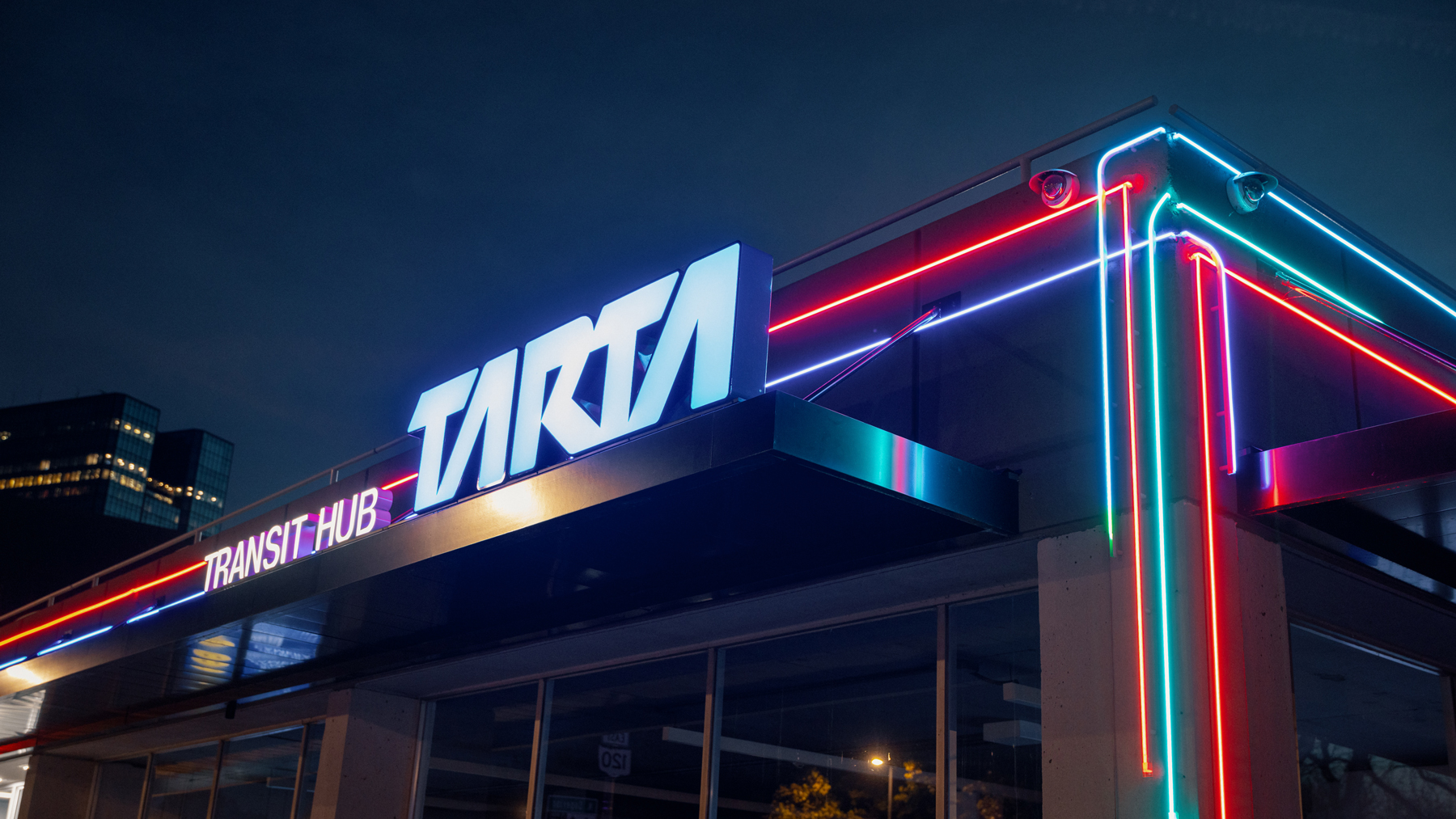
- Beginning in 2027, add new public and private partners annually into the Downtown Transit Hub to better support all customers and the Vistula neighborhood
Objective I. C.:
Affordability of Transit
What: TARTA will ensure that transit remains accessible and affordable for all riders by offering a variety of pricing options and maintaining fares that reflect regional needs and industry best practices.
How: TARTA will explore reducing financial barriers to mobility and supporting riders across all service areas.
Key Performance Indicators:
- Assess fare cost based on other state/national transportation providers’ fare schedules
- Increase customer utilization of fare capping each year
- Develop an on-vehicle cashless plan by 2030
Objective I. D.:
Understanding & Trust
What: TARTA will strengthen its brand across the region by increasing understanding of transit offerings and building customer trust.
How: TARTA will cultivate a clear, recognizable, and trusted brand that reflects its commitment to excellence and connects meaningfully with riders and the broader community.
Key Performance Indicators:
- Increase customer awareness and understanding of all services
- Increase customer trust in the TARTA brand (people, services, organization)
- Increase in marketing metrics: Clicks, impressions, conversions
- By 2027, launch a new brand for the fixed route buses
Goal II: Stewardship
Managing finances and resources wisely for the betterment of our community.
Objective II. A.:
Financial Management
What: Ensure the responsible management of TARTA’s financial resources to maintain stability, transparency, and public trust.
How: Strengthen financial systems, diversify funding streams, and align investments with community priorities to maximize value and sustainability.
Key Performance Indicators:
- Balanced annual operating budget
- Reserve fund equal to 6 months of operating expenses
- Clean annual financial audit
- Control cost per hour up to 5% per year
- Control operating expense growth up to 5% per year
Objective II. B.:
Resource Management
What: Ensure that TARTA’s resources are managed responsibly to maximize reliability, safety, and long-term value for the community.
How: Implement disciplined asset planning, lifecycle management, and sustainability practices to optimize the performance of fleet, facilities, technology, equipment, and infrastructure.
Key Performance Indicators:
- Increase % of capital projects delivered on schedule and within budget
- Desirable ratio of preventive to corrective maintenance
- Increase in State of Good Repair (SGR) compliance rate (e.g., predictive maintenance and scheduling including the use of AI, lifecycle management, emerging technologies, fleet age/replacement schedules)
Objective II. C.:
Long-Range Financial Sustainability
What: Position TARTA to operate with fiscal sustainability over the long term.
How: Advance fiscal sustainability practices through disciplined financial planning, efficient use of resources, and partnerships that strengthen fiscal stewardship and dependable operations.
Key Performance Indicators:
- Diversify funding sources (federal/state/local/private)
- Continuous assessment of the political landscape
- Success of governmental advocacy efforts
- Annual reviews of the Capital and Operating 5-year projections
- Control operating expense growth up to 5% per year
Objective II. D.:
Community Value
What: Demonstrate TARTA’s value to the region by enhancing access, strengthening partnerships, and contributing to community well-being, economic opportunity, and environmental quality.
How: TARTA will work closely with local governments, employers, and community organizations to expand access to jobs and services, support regional priorities, and report transparently on progress and outcomes.
Key Performance Indicators:
- Increase in number of partnerships and leadership opportunities to shape the region
- Increase in key measures on community value survey
- Establish online dashboard for community reporting
- Pass next levy
- Continue to reduce emissions
Goal 3: Operational Excellence
Empowering employees to take ownership in driving exceptional transit that makes current riders proud to ride and inspires new riders to come aboard.
TARTA becomes a transit option more people choose when it is also a place where employees want to stay and grow. Across the organization, all employees share responsibility for delivering reliable service and meeting customer needs, because employees drive the customer experience.
NOTE: This goal is related to Customer Experience but focuses on what employees do to deliver customer service.
Objective III. A.:
Quality Delivery
What: TARTA is committed to providing a level of service that consistently meets and exceeds rider expectations across all operations. This includes delivering reliable operations, clean and comfortable vehicles and facilities, and technology that makes transit intuitive, convenient, and responsive to customer needs.
How: Invest in the people, places, vehicles, and processes that shape how riders experience transit.
Key Performance Indicators:
- Increase investment in employee training and professional growth
- Decrease in reports/complaints from riders about cleanliness of buses/stops
- For fixed routes, Flex, and Move:
- Increase in On-Time Performance (OTP)
- Increase in Origin-to-Destination Efficiency
- Decrease in customer complaints about service
Objective III. B.:
Safety
What: TARTA will provide a safe transit system for riders and employees by proactively reducing risks, strengthening security, and ensuring that operations support physical, emotional, and operational safety across the organization.
How: TARTA is committed to advancing a robust safety framework grounded in the Federal Transit Administration’s (FTA) four safety pillars. Through a collaborative labor/management relationship, clear policies, proactive risk management, data-driven assurance, and continuous safety promotion, TARTA will ensure that safety remains the foundation of operational excellence.
Key Performance Indicators:
- Decrease in incidents reported on buses
- Decrease in incidents reported at the Hub or other TARTA facilities
- Decrease in number of collisions
- Comparison of accidents on the road in cars/trucks vs. on transit in the region
- Reduction of Chargeable Accidents/Incidents by 5%
Objective III. C.:
Employee Experience
What: TARTA will cultivate a supportive, professional, and growth-oriented workplace that attracts top talent, invests in employee development, and fosters a culture where every team member feels valued, equipped, and proud to serve the community.
How: A strong employee experience is essential to delivering exceptional transit service. TARTA will enhance recruitment, retention, training, and organizational culture through intentional investment in its workforce.
Key Performance Indicators:
- Increase in retention rate
- Compensation study results (measuring competitive and equitable pay) and incorporation of changes as needed
- Increase in employee satisfaction
- Increase in neutral and positive results from stay and exit interviews
Goal IV: Operational Excellence
Connecting more people and places in the region.
Objective IV. A.:
Innovation
What: TARTA will invest in new technology, vehicles, and infrastructure that make services easier to use and more efficient to operate.
How: TARTA will upgrade customer-facing technology, modernize fleet and maintenance systems, and advance major service improvements to support reliable, high-quality transit.
Key Performance Indicators:
- Increase in customer satisfaction
- Increase in agreement with employee response to tools needed to do my job
- Meeting BRT development and implementation milestones
- Increase in AI adoption across workforce
- Begin transformation of a modern maintenance facility at Central Avenue by 2027
Objective IV. B.:
Geographic & Service Expansion
What: TARTA will extend transit access to underserved communities and growing areas within the region, ensuring that more residents have reliable connections to jobs, services, and opportunities.
How: TARTA will conduct comprehensive feasibility studies, engage community stakeholders, and develop phased expansion plans while ensuring financial sustainability and operational readiness.
Key Performance Indicators:
- Develop and launch option(s) for service to currently underserved areas in Lucas County by 2030
- Complete WorkLink Study by 2026
- Develop options to expand service into portions of Wood County by 2027
- Increase in ridership across areas of need
Objective IV. C.:
Economic, Community, & Workforce Development
What: Accelerate regional vitality by leveraging transit infrastructure.
How: Support the region’s businesses and residents through targeted workforce, economic, and community development initiatives that move the workforce and help drive community prosperity.
Key Performance Indicators:
- Increase in customer and community satisfaction with economic, community, and workforce supports provided through transit
- Increase in employer and nonprofit partner satisfaction with transit
- Increase the number of residents who are living within a 10-minute walk or quarter mile of fixed route transit service
- Bring in new partners to the Hub that benefit all customers and the Vistula neighborhood by 2027




Empowering people to make connections.